8 Simple Ways How to Treat Verticillium Wilt
Verticillium wilt transforms healthy tomato plants into wilted, yellowing casualties within a single growing season. The soil-borne fungal pathogen Verticillium dahliae invades vascular tissue and blocks water transport, causing progressive dieback that gardeners often mistake for drought stress. Learning how to treat verticillium wilt requires understanding that no fungicide can cure an infected plant, but strategic cultural practices reduce pathogen populations and protect future crops.
Materials
Soil Amendments (pH 6.0–6.8 optimal)
Compost (NPK 1-1-1) at 2–3 inches tilled into the top 8 inches improves soil structure and feeds beneficial microbes that compete with Verticillium spores. Dolomitic lime raises pH in acidic soils where pathogen survival increases.
Biological Controls
Trichoderma harzianum (commercial formulations like RootShield) colonizes root surfaces and produces enzymes that degrade fungal cell walls. Mycorrhizal fungi inoculants (species Rhizophagus irregularis) establish symbiotic networks that enhance phosphorus uptake and activate plant immune responses.
Cover Crops
Brassica juncea (mustard greens) contains glucosinolates that break down into isothiocyanates with biofumigant properties. Sorghum-sudangrass hybrids suppress Verticillium through allelopathic root exudates.
Resistant Varieties
Tomato cultivars carrying the Ve1 gene (like 'Iron Lady' or 'Mountain Magic') show polygenic resistance. Strawberry cultivars 'Albion' and 'San Andreas' tolerate infection better than 'Chandler.'
Tools & Protective Barriers
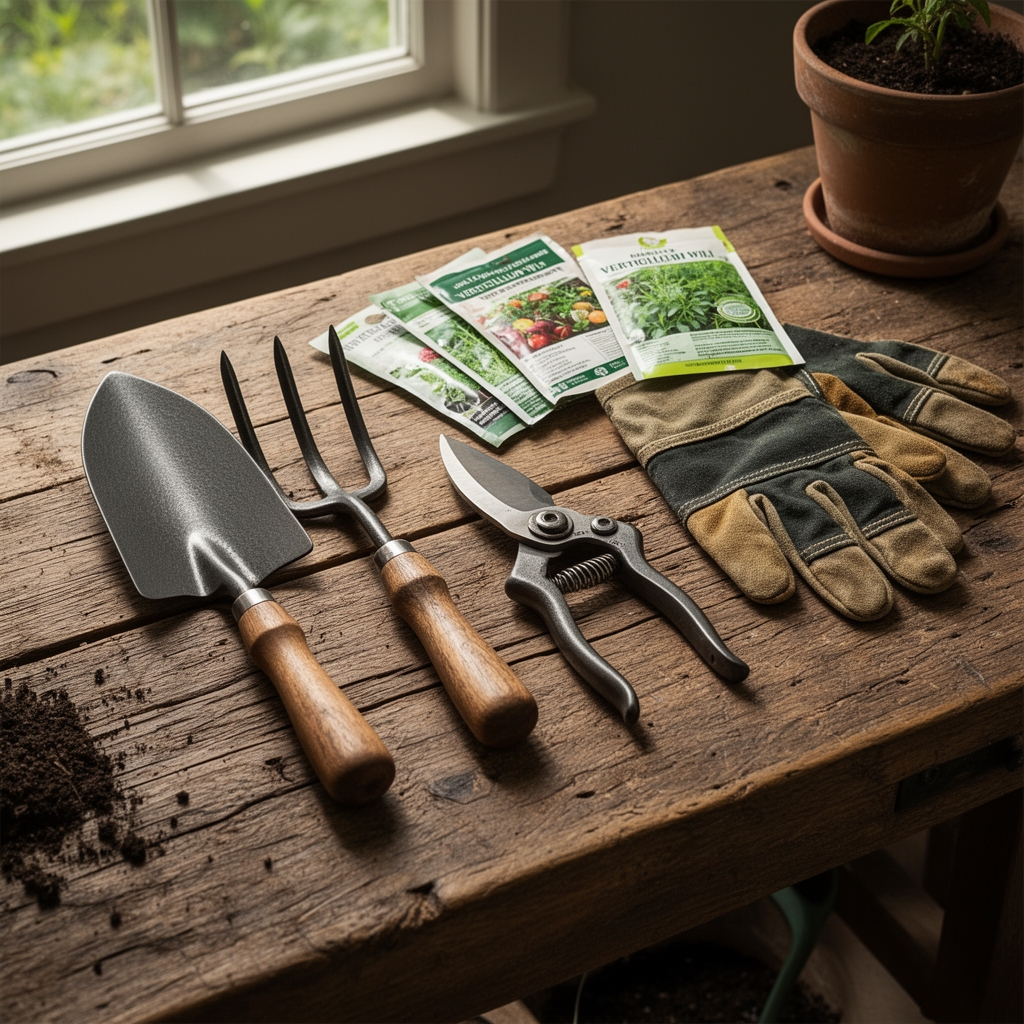
Five-gallon fabric grow bags filled with sterile potting mix isolate roots from infested field soil. Copper-based pruning shear disinfectant (active ingredient: copper sulfate pentahydrate) prevents cross-contamination between plants.
Timing
Spring Preparation (Zones 5–9)
Begin soil solarization 8–10 weeks before the last expected frost. In Zone 7, this means mid-March for a mid-May planting window. Solarization requires 4–6 weeks of clear polyethylene mulch trapping solar radiation to heat soil to 125°F at 6-inch depth.
Fall Intervention (All Zones)
Plant cover crops immediately after harvest, ideally 6–8 weeks before first frost. Mustard greens reach biofumigant potential when tilled at flowering (45–60 days after seeding). In Zone 6, seed by mid-September for incorporation before ground freeze.
Mid-Season Management
Remove symptomatic plants at first sign of infection (unilateral leaf yellowing, vascular browning visible in stem cross-section). Infection spreads through water movement, so act within 48 hours of symptom detection.
Phases
Phase 1: Sowing & Soil Preparation
Till 3 inches of aged compost into the top 8 inches of soil. Apply Trichoderma granules at manufacturer's recommended rate (typically 1 lb per 100 square feet) and water immediately to activate spore germination. For row crops, create 6-inch raised beds that improve drainage and reduce root contact with pathogen-laden subsoil.
Pro-Tip: Mix 1 tablespoon of soluble kelp extract (0-0-1 NPK plus 70+ trace minerals) per gallon of transplant water to boost auxin production and lateral root development.
Phase 2: Transplanting
Space plants 30–36 inches apart to maximize airflow and reduce humidity that favors secondary infections. Dig planting holes 12 inches deep and backfill with a 50/50 blend of native soil and compost. Position transplants at the same depth as container soil line. Avoid deep planting that places stems in pathogen-rich zones.
Pro-Tip: Coat roots with mycorrhizal inoculant powder immediately before planting. Physical contact between fungal spores and root hairs initiates colonization within 72 hours.
Phase 3: Establishing & Monitoring
Apply 2–3 inches of organic mulch (shredded hardwood bark or straw) maintaining a 3-inch gap around stems. Mulch moderates soil temperature fluctuations that stress plants and make them susceptible to infection. Check plants twice weekly for asymmetrical wilting. Cut suspect stems at soil line and examine for chocolate-brown vascular discoloration. Healthy xylem appears cream-colored.
Pro-Tip: Prune lower foliage 8 inches above soil to prevent splash dispersal of microsclerotia during irrigation. Make cuts at 45-degree angles 1/4 inch above leaf nodes to promote rapid wound healing.
Troubleshooting
Symptom: Unilateral wilting (one side of plant droops)
Solution: This hallmark symptom indicates vascular blockage. Remove entire plant including roots. Do not compost. Bag and discard or burn material. Drench surrounding soil with Trichoderma suspension at triple the label rate.
Symptom: V-shaped yellow lesions on lower leaves
Solution: Classic early-stage infection. Prune affected leaves 2 inches below visible symptoms. Disinfect tools between cuts using 10% bleach solution (1 part bleach to 9 parts water). Increase phosphorus with bone meal (3-15-0) to enhance lignin production in cell walls.
Symptom: Stunted growth with chlorotic (pale) new leaves
Solution: Indicates nitrogen immobilization by competing soil fungi. Apply calcium nitrate (15-0-0) at 1 tablespoon per gallon as foliar spray every 10 days. Calcium improves cell membrane integrity against pathogen penetration.
Symptom: Dark streaking in stem vascular tissue
Solution: Advanced infection. Plant cannot be saved. Excavate surrounding soil to 12-inch depth and solarize excavated area for 6 weeks before replanting with resistant varieties.
Symptom: Rapid collapse during fruit set
Solution: Stress-triggered disease progression. Reduce fruit load by removing 30% of immature fruit. Apply kelp foliar spray (1 tablespoon per gallon) to supply cytokinins that maintain chlorophyll and delay senescence.
Maintenance
Water deeply once per week delivering 1 inch (measured with rain gauge) rather than frequent shallow irrigation. Deep watering encourages roots to grow below the pathogen-concentrated surface layer. Drip irrigation prevents splash dispersal of microsclerotia and keeps foliage dry.
Rotate susceptible crops on a 4-year cycle minimum. Verticillium microsclerotia survive 10–15 years in soil, but populations decline 60–80% without host plants. Rotate to resistant species: alliums (onions, garlic), brassicas (cabbage, broccoli), or grasses (corn, wheat).
Side-dress with compost tea every 3 weeks during active growth. Brew 1 lb finished compost in 5 gallons of non-chlorinated water for 24 hours with aeration. The solution delivers 10^8 CFU/ml beneficial bacteria that produce antibiotics suppressing Verticillium propagules.
Test soil pH annually. Applications of elemental sulfur (1 lb per 100 square feet) lower pH one point over 6 months in clay soils with high cation exchange capacity above 20 meq/100g.
FAQ
Can I save a plant with verticillium wilt?
No. Once vascular tissue shows browning, systemic infection is irreversible. Remove infected plants immediately to prevent microsclerotia from accumulating in soil.
How long does verticillium stay in soil?
Microsclerotia persist 10–15 years under dry conditions. Populations decline faster in soils with high organic matter (above 5%) where microbial competition increases.
Do fungicides work against verticillium wilt?
No registered fungicides effectively treat established infections. Preventive applications of Trichoderma or Bacillus subtilis reduce infection rates by 40–60% when applied before planting.
What temperature kills verticillium?
Soil solarization reaching 125°F at 6-inch depth for 4 weeks kills 95% of microsclerotia. Temperatures below 100°F are ineffective.
Which vegetables resist verticillium wilt?
Beans, peas, onions, garlic, corn, beets, carrots, and lettuce show natural resistance. Tomatoes, peppers, eggplants, potatoes, strawberries, and cucurbits are highly susceptible unless bred for resistance.