9 Best Downy Mildew Treatment Options
Yellowed leaves curl inward at dawn, their undersides dusted with gray fuzz that smells faintly of rust and decay. Downy mildew arrives without warning, spreading across cucurbits, brassicas, and ornamentals in cycles measured by hours rather than days. The best downy mildew treatment requires understanding the pathogen's obligate parasitic nature and deploying interventions that disrupt sporulation before oomycete hyphae colonize intercellular spaces. Copper formulations, biological antagonists, and cultural modifications form the foundation of integrated management. Each option addresses different infection stages and host vulnerabilities.
Materials
Successful pathogen suppression depends on matching treatment chemistry to foliar pH and nutrient status. Most infected plants exhibit compromised cation exchange capacity, which reduces uptake efficiency.
Copper-Based Fungicides (pH 6.0-7.5)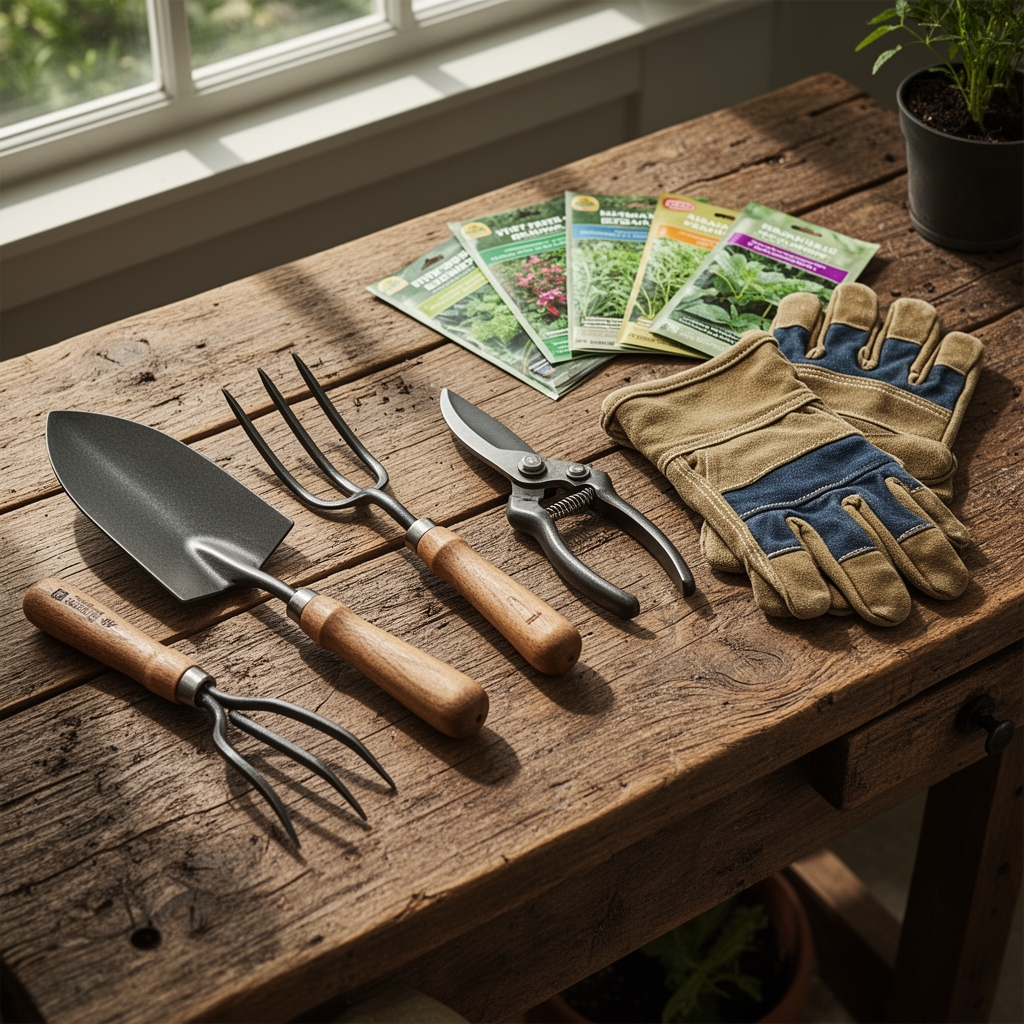
Fixed copper hydroxide at 1.5-2.0 lb per 100 gallons provides 7-10 days of protectant activity. Apply when night temperatures remain above 50°F and relative humidity exceeds 85 percent. Copper disrupts zoospore motility by binding sulfhydryl groups in cellular enzymes. Avoid tank-mixing with high-nitrogen foliar feeds (>10-0-0 ratios) that raise pH above 8.0 and reduce copper solubility.
Potassium Bicarbonate Solutions (pH 8.0-8.5)
Mix 2.5-3.0 tablespoons per gallon with 1 tablespoon horticultural oil. Bicarbonate salts collapse fungal cell walls through osmotic shock. Reapply every 5-7 days during active infection. Pair with balanced 5-5-5 organic amendments to prevent potassium excess that locks out calcium and magnesium.
Bacillus subtilis (Biological, pH-neutral)
Strain QST 713 colonizes leaf surfaces and produces lipopeptide antibiotics. Apply at 1-2 quarts per acre when leaf wetness duration forecasts predict 6-hour dew periods. Works best when mycorrhizal fungi maintain robust root colonization above 40 percent.
Phosphorous Acid (pH 3.0-4.5)
Systemic uptake occurs within 24 hours. Phosphite ions induce phytoalexin production and strengthen cell wall lignification. Use 2-3 pints per 100 gallons as a soil drench or foliar spray. Avoid application within 14 days of phosphate fertilizers (NPK ratios with middle number above 10) to prevent nutrient antagonism.
Mancozeb (Multi-site Contact, pH 6.5-7.0)
Broad-spectrum ethylene bisdithiocarbamate at 1.5-2.0 lb per acre. Protects uninfected tissue but shows no curative action. Requires 12-hour spray interval before rain events. Supplement with 4-4-4 organic meal to maintain soil carbon above 3 percent.
Timing
Hardiness Zones 3-5 face peak downy mildew pressure from late June through August when nighttime temperatures settle into the 60-70°F range. Zones 6-8 experience two infection windows: April-May and September-October. Zones 9-11 require year-round monitoring during fog and marine layer events.
Begin protectant applications 14 days before historical infection dates. In Zone 7, this translates to April 1 for spring brassicas and August 15 for fall cucurbits. Cold-climate growers should track last frost dates and initiate treatment when soil temperatures at 4-inch depth reach 55°F for three consecutive days.
Phases

Sowing
Start seeds in sterilized mix with perlite-to-peat ratio of 1:3. Maintain substrate EC below 1.2 mS/cm to prevent salt stress that weakens cuticle barriers. Pre-treat seed with Trichoderma harzianum at 1 x 10^6 CFU per gram. Water from below to keep cotyledons dry. Pro-Tip: Inoculate transplant plugs with endomycorrhizal spores (Rhizophagus irregularis) at 200 propagules per cubic inch to enhance phosphorus uptake and auxin distribution during establishment.
Transplanting
Move seedlings at 4-true-leaf stage when roots form visible mats but before circling. Space plants 18-24 inches apart to ensure air circulation above 2 mph at canopy level. Drench root zones with phosphorous acid solution (3 pints per 100 gallons) 48 hours post-transplant. Pro-Tip: Prune lower leaves at 45-degree angles 1/4 inch above main stem to create wounds that seal within 6 hours and prevent splash dispersal of sporangia.
Establishing
Monitor adaxial and abaxial leaf surfaces every 48 hours. Apply biological antagonists when first symptoms appear within a 3-foot radius. Rotate from copper to bicarbonate to phosphorous acid on 14-day intervals to prevent resistance. Pro-Tip: Foliar feed with calcium chloride at 1-2 lb per 100 gallons to strengthen middle lamella pectin chains and restrict haustoria penetration into mesophyll cells.
Troubleshooting
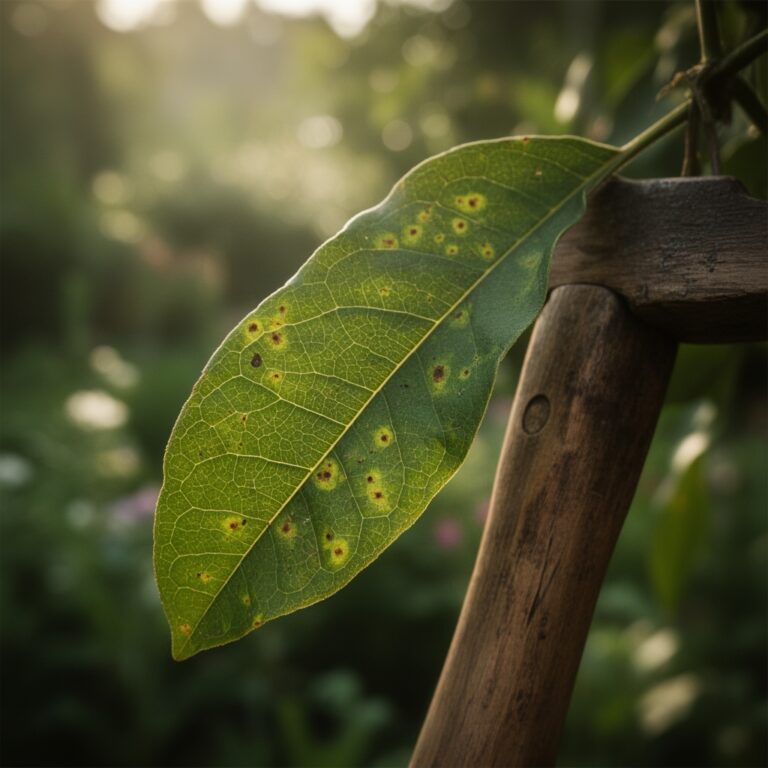
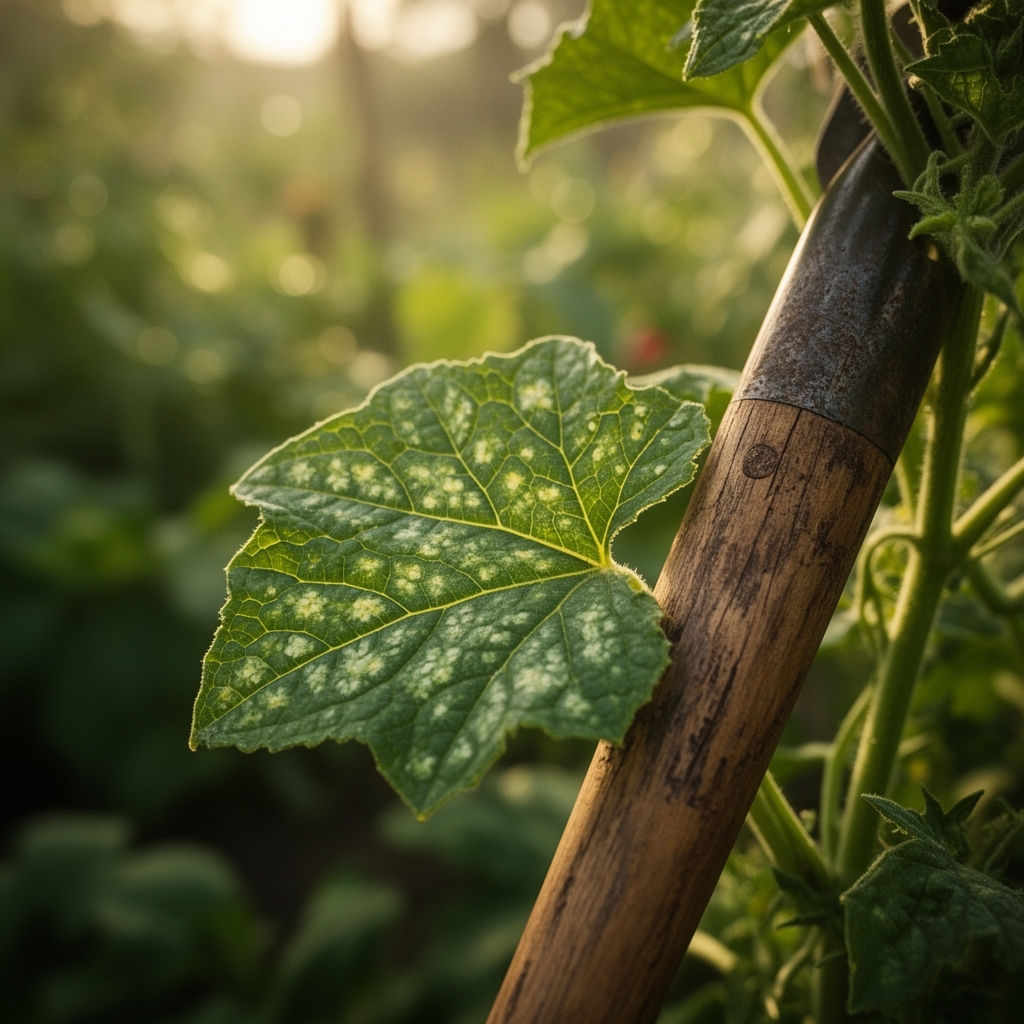
Symptom: Angular yellow lesions confined by leaf veins, gray sporulation on undersides
Solution: Apply potassium bicarbonate within 24 hours. Remove infected leaves and dispose in sealed bags. Increase potassium sulfate side-dressing to 1 lb per 100 square feet to raise tissue K above 3.5 percent dry weight.
Symptom: Stunted growth with interveinal chlorosis despite fungicide use
Solution: Test soil cation exchange capacity. If below 10 meq/100g, incorporate aged compost at 2 cubic feet per 100 square feet. Manganese deficiency mimics infection symptoms. Apply chelated manganese at 0.5 lb per acre if tissue tests show below 40 ppm.
Symptom: Rapid defoliation in humid microclimates
Solution: Install oscillating fans to reduce leaf wetness duration below 4 hours nightly. Prune dense canopy sections to achieve 30 percent light penetration. Switch to systemic phosphorous acid for 21-day residual activity.
Symptom: Treatment burn on leaf margins
Solution: Reduce spray concentration by 25 percent. Apply during early morning when stomata close and temperatures remain below 75°F. Add non-ionic surfactant at 0.125 percent volume to improve coverage without phytotoxicity.
Maintenance
Irrigate with 1 inch of water per week through drip lines positioned 4 inches from stem bases. Maintain soil moisture at 60-70 percent field capacity measured at 6-inch depth. Overhead irrigation during fruiting invites reinfection. Apply 1/2-inch layer of aged wood chips as mulch to suppress soil splash and regulate temperature fluctuation within 5-degree range.
Feed with 10-10-10 controlled-release fertilizer at 2 lb per 100 square feet every 6 weeks. Excessive nitrogen (above 4 percent tissue dry weight) produces succulent growth susceptible to pathogen entry. Foliar applications of kelp extract at 1 tablespoon per gallon every 14 days provide cytokinins that maintain cell wall integrity.
Prune at 10 a.m. when dew evaporates but before afternoon heat stress. Sanitize tools with 10 percent bleach solution between cuts. Scout twice weekly during high-pressure periods. Mark infected plants with flags for focused treatment rather than blanket coverage.
FAQ
How quickly does downy mildew spread?
Sporangia release zoospores every 90-120 minutes under optimal conditions. A single lesion produces 100,000 spores in 24 hours. Infection cycles complete in 4-7 days.
Can infected plants recover fully?
Established infections cannot be reversed. Early-stage treatment halts progression and protects new growth. Yield losses range from 30-80 percent depending on intervention timing.
Which crops face highest risk?
Cucumbers, melons, squash, spinach, basil, and sunflowers. Each hosts species-specific Peronospora or Plasmopara strains. Crop rotation provides no protection due to narrow host ranges.
Do organic treatments match synthetic efficacy?
Copper and potassium bicarbonate achieve 70-85 percent control when applied preventively. Synthetic mancozeb and phosphorous acid reach 85-95 percent. Combining both approaches maximizes suppression.
When should I destroy infected plants?
Remove plants when more than 50 percent of leaf area shows symptoms. Bag and dispose off-site. Tilling infected tissue into soil perpetuates oospore populations for 5-7 years.