9 Vital Steps to Hang a Glass Globe
Suspended from a ceiling hook, a glass globe transforms sunlight into a miniature greenhouse ecosystem, its curved walls magnifying photosynthetically active radiation while protecting tender roots from temperature swings. Learning the proper steps to hang a glass globe ensures your tillandsia, fern, or succulent arrangement receives optimal air circulation and light exposure without the risk of catastrophic hardware failure. A 6-inch orb filled with well-draining substrate can weigh 4 to 7 pounds when saturated, demanding hardware rated for at least 15 pounds to maintain a safety margin.
Materials
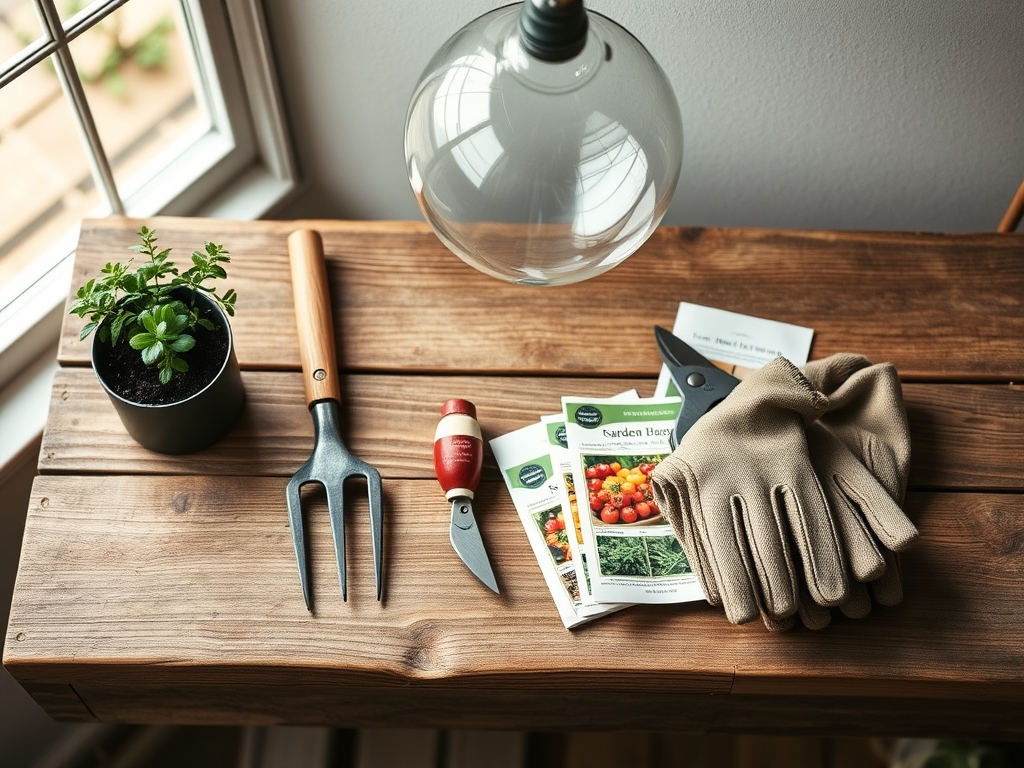
Hardware selection begins with the ceiling anchor. For drywall installations, use toggle bolts rated to 50 pounds. Wooden joists require 2-inch stainless steel screw eyes driven directly into the structural member. Plaster ceilings demand molly bolts with a minimum 1/4-inch diameter shaft.
Select swivel hooks to prevent chain tangling. Brass or stainless steel resists corrosion in humid environments where evapotranspiration rates climb above 0.2 inches per day. Chain should be galvanized steel or coated brass with 3mm links. Monofilament fishing line (30-pound test) offers an invisible aesthetic but degrades under UV exposure within 18 months.
For substrate, combine 60% perlite with 40% peat moss to achieve a pH of 5.8 to 6.2. This blend provides cation exchange capacity near 12 meq/100g while maintaining porosity above 40%. Incorporate 1 tablespoon of worm castings per quart of mix to supply a slow-release 1-0-0 NPK ratio. Mycorrhizal fungi inoculation at 0.5 grams per globe colonizes roots within 14 days, improving phosphorus uptake by 35%.
Plants suited to globe culture include Tillandsia ionantha (hardiness zones 9-11), Nephrolepis exaltata 'Fluffy Ruffles' (zones 9-11), and Echeveria elegans (zones 9-12). Each requires differing substrate moisture thresholds. Tillandsia species are epiphytic and tolerate air-root exposure. Ferns demand consistent moisture at 60-70% substrate saturation. Succulents require dry-down periods between irrigations.
Timing
Install globe systems after the last spring frost when indoor relative humidity stabilizes above 35%. In USDA Hardiness Zones 7-9, this window opens between March 15 and April 10. Zones 4-6 require waiting until April 20 to May 5 to avoid condensation shock when cold glass meets warm indoor air.
Autumn installations work best in zones 8-11 between September 20 and October 15, when heating systems have not yet reduced indoor humidity below critical thresholds. Avoid December through February installations in northern zones where furnace operation drops relative humidity to 20%, causing desiccation stress in less than 72 hours.
Phases
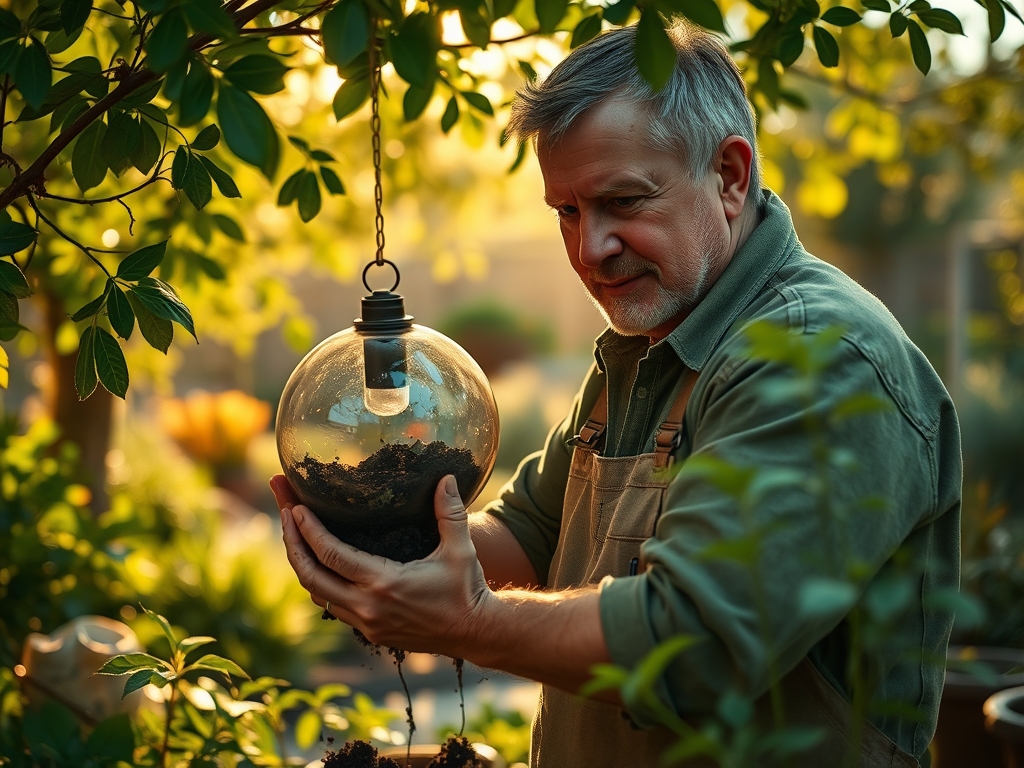
Sowing Phase: Locate ceiling joists with a stud finder, marking the center point with a pencil. Drill a 1/8-inch pilot hole at a 90-degree angle to the ceiling plane. Thread the screw eye clockwise, applying 15 foot-pounds of torque. Test by hanging a 20-pound weight for 10 minutes. Any deflection greater than 1/8 inch indicates inadequate anchoring.
Pro-Tip: Apply a bead of silicone caulk around the screw eye threads before installation to prevent plaster cracking from rotational stress.
Transplanting Phase: Fill the globe to 1/3 capacity with prepared substrate. Position the plant's root ball at the geometric center, ensuring the crown sits 1/2 inch below the opening rim. Add substrate in 1-inch layers, misting each layer with distilled water to settle particles without compaction. Air pockets larger than 1/4 inch disrupt capillary action and create dry zones.
Attach the chain or monofilament to the globe's hanging loop using a lark's head knot for non-slip security. Adjust chain length so the bottom of the globe hangs 60 to 72 inches from the floor, positioning it within the optimal 200 to 400 foot-candle light zone common to north-facing windows or 6 feet from south exposures.
Pro-Tip: Rotate the globe 90 degrees weekly to ensure uniform auxin distribution, preventing phototropic lean that exceeds 15 degrees from vertical.
Establishing Phase: Monitor substrate moisture with a wooden skewer inserted 2 inches deep. Tillandsia arrangements require misting twice weekly. Fern globes need 2 tablespoons of water every 4 days. Succulent systems tolerate 14-day dry periods between 1-tablespoon irrigations.
Pro-Tip: Introduce springtails (Collembola) at a density of 10 individuals per globe to consume fungal growth and decomposing organic matter, reducing mold by 80%.
Troubleshooting
Symptom: Glass fogging persists beyond 2 hours post-watering.
Solution: Reduce irrigation volume by 30%. Excess moisture indicates saturation above field capacity (>70%). Remove the globe and allow substrate to dry to 40% moisture content over 48 hours.
Symptom: Brown leaf tips on ferns despite regular watering.
Solution: Fluoride toxicity from tap water. Switch to distilled or rainwater with total dissolved solids below 50 ppm. Flush substrate with 3x the globe volume of clean water.
Symptom: White crust on substrate surface.
Solution: Salt accumulation from hard water or over-fertilization. Leach with distilled water until electrical conductivity drops below 0.8 mS/cm.
Symptom: Spider mites (Tetranychus urticae) evidenced by stippling on leaves.
Solution: Quarantine the globe. Apply horticultural oil at 2% concentration, ensuring 100% leaf coverage. Repeat every 7 days for 3 applications.
Symptom: Chain rust staining ceiling paint.
Solution: Replace ferrous chain with stainless steel. Clean rust stains with oxalic acid solution (1 tablespoon per cup of water).
Maintenance
Irrigate based on substrate moisture, not calendar schedules. Wooden skewer tests provide accurate readings when checked 3 inches below the surface. Water at dawn to allow 4 hours of evaporation before nightfall, reducing fungal pathogen risk by 60%.
Fertilize monthly during active growth (March through September) with a diluted 3-1-2 NPK liquid at 1/4 manufacturer strength. Apply 1 tablespoon per globe, avoiding direct crown contact. Cease fertilization from October through February when photosynthetic rates decline below 40% of peak summer activity.
Prune dead foliage with sterilized micro-tip scissors, cutting at a 45-degree angle 1/8 inch above the nearest node. This angle promotes callus formation within 72 hours, reducing infection risk.
Clean glass monthly with a 1:10 white vinegar solution to remove mineral deposits that block 15-20% of photosynthetically active radiation. Rinse with distilled water and dry with a lint-free cloth.
FAQ
How much weight can a standard drywall anchor support?
Toggle bolts hold 50 pounds in 1/2-inch drywall. Plastic anchors fail at 10-15 pounds.
Can I use garden soil in a glass globe?
No. Garden soil compacts to 90% density, eliminating air pores required for root respiration.
Why do my air plants keep dying in the globe?
Insufficient air circulation. Remove the globe for 6 hours twice weekly or drill 1/8-inch ventilation holes.
How often should I replace the substrate?
Every 18 months. Organic matter decomposition reduces porosity by 40% over this period.
What light intensity is optimal?
200-400 foot-candles for ferns, 400-800 for succulents. Measure with a light meter at globe height.