5 Vital Steps to Mosquito Repellent Plants
The humid air above your patio hangs thick with dusk, and the first whine of a mosquito announces the end of outdoor comfort. For centuries, gardeners have deployed strategic plantings to alter this equation. The steps to mosquito repellent plants combine botanical chemistry with practical horticulture, transforming vulnerable zones into defended perimeters through the deliberate cultivation of species rich in volatile oils and terpenoid compounds. These plants do not eliminate vectors entirely. They saturate microclimates with aromatic molecules that interfere with insect olfactory receptors, masking the carbon dioxide and lactic acid signatures humans emit.
Materials
Prepare loam-based growing medium with a pH between 6.0 and 7.0 for optimal nutrient availability. Citronella grass (Cymbopogon nardus) and lemon balm (Melissa officinalis) thrive in this range, where iron and manganese remain soluble. Acidic soils below 5.5 lock phosphorus into insoluble complexes, stunting root development.
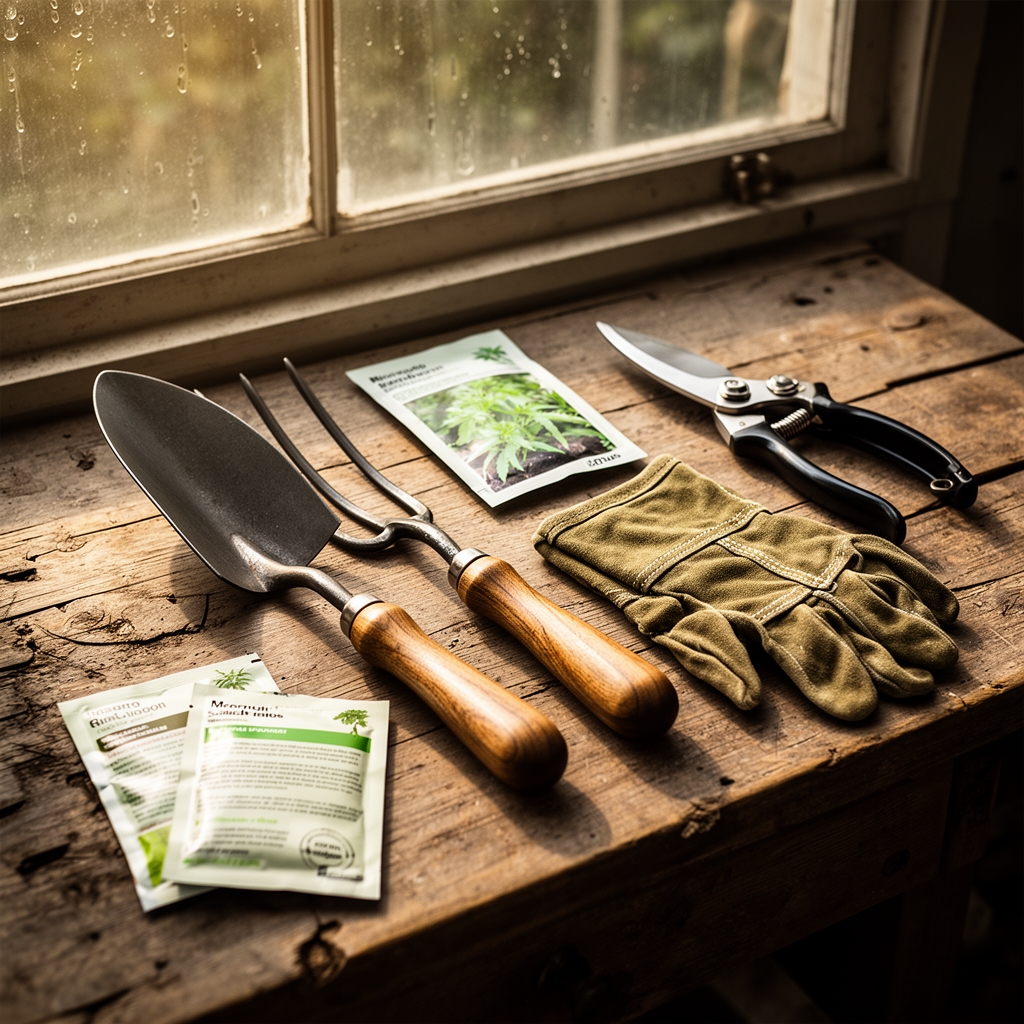
Select a balanced organic fertilizer rated 4-4-4 or 5-5-5 for nitrogen, phosphorus, and potassium. Blood meal (12-0-0) boosts vegetative growth in basil (Ocimum basilicum) but must be tempered with bone meal (3-15-0) to avoid excessive leaf production at the expense of essential oil concentration. Lavender (Lavandula angustifolia) demands low nitrogen, thriving instead with applications of 2-4-4 formulations that emphasize phosphorus for robust flowering.
Incorporate perlite at a 20% volumetric ratio to enhance drainage. Mosquito-repellent species commonly originate from Mediterranean or tropical savanna ecosystems where waterlogged roots invite Phytophthora and Pythium pathogens. Cation exchange capacity (CEC) should measure 10-15 meq/100g for container mixes, retaining nutrients without compaction.
Acquire mycorrhizal inoculant containing Glomus intraradices. This arbuscular fungus colonizes root cortex cells, extending hyphal networks that increase phosphorus uptake by 300%. Marigold (Tagetes spp.) and rosemary (Rosmarinus officinalis) show measurable increases in camphor and thujone production when mycorrhizal associations establish.
Timing
Plant after the last spring frost when soil temperatures stabilize above 60°F. In USDA Hardiness Zone 7, this window opens mid-April. Zone 9 gardeners may begin in late February. Citronella grass, a tropical perennial, tolerates no frost. Transplant only when nighttime lows remain above 50°F to prevent auxin disruption and transplant shock.
Start basil seeds indoors 6 weeks before the last frost date. Germination requires 70-75°F soil temperature, achievable with heat mats set to 72°F. Lavender seeds exhibit slow germination, often requiring 21-28 days and cold stratification. Place seeds in moist sand at 40°F for 30 days before sowing to break dormancy.
For perennial species like rosemary and lavender, fall planting in Zone 8 and warmer allows root establishment before summer heat. Install transplants 8 weeks before the first hard freeze, giving roots time to penetrate soil horizons before winter dormancy.
Phases
Sowing: Direct-sow marigold seeds 1/4 inch deep in well-draining beds after soil reaches 65°F. Space seeds 10 inches apart to ensure airflow and reduce powdery mildew incidence. Basil germinates in 5-7 days under consistent moisture. Avoid overhead watering; humidity above 85% triggers damping-off fungi.

Pro-Tip: Dust seeds with Trichoderma harzianum before sowing. This antagonistic fungus colonizes the rhizosphere, outcompeting pathogens for resources and space.
Transplanting: Harden off indoor seedlings over 10 days, exposing them to outdoor conditions incrementally. Begin with 2 hours of morning sun, increasing by 1 hour daily. Dig planting holes twice the root ball diameter. Position the crown level with the soil surface to prevent stem rot.
Pro-Tip: Prune basil seedlings at the third leaf node, cutting at a 45-degree angle 1/4 inch above the node. This triggers lateral branching and increases leaf surface area by 60%, amplifying volatile oil dispersal.
Establishing: Water transplants with a dilute solution of kelp extract (1 tablespoon per gallon) to stimulate root hair proliferation. Apply 1 inch of water per week for the first 4 weeks, then reduce to 0.5 inches. Citronella grass requires consistent moisture but tolerates brief dry periods once roots penetrate 8 inches deep.
Mulch with 2 inches of shredded hardwood bark to moderate soil temperature and suppress weeds. Avoid mulch contact with plant stems. Decomposing organic matter harbors fungal spores that invade stressed tissues.
Pro-Tip: Pinch off early flower buds on basil for the first 6 weeks. Flowering redirects auxin and energy from leaf production, reducing essential oil yields by 40%.
Troubleshooting
Symptom: Yellowing lower leaves on basil with green veins intact.
Solution: Nitrogen deficiency. Apply fish emulsion (5-1-1) at 1/4 strength weekly for 3 weeks. Excessive nitrogen causes lush growth with diluted oil concentration, so monitor leaf color and halt applications when deep green returns.
Symptom: White powdery coating on lavender foliage.
Solution: Powdery mildew (Erysiphe cichoracearum). Space plants 18 inches apart to improve air circulation. Spray with 1 tablespoon baking soda per gallon of water, adding 1 teaspoon insecticidal soap as a surfactant. Apply every 7 days until symptoms resolve.
Symptom: Wilting rosemary despite moist soil.
Solution: Root rot from Phytophthora cinnamomi. Cease irrigation. Improve drainage by amending soil with 30% coarse sand. In severe cases, excavate the plant, prune necrotic roots, and replant in fresh medium.
Symptom: Stunted marigold growth with purple-tinged leaves.
Solution: Phosphorus deficiency. Apply bone meal at 2 pounds per 100 square feet, watering thoroughly to move phosphate ions into the root zone.
Maintenance
Water established plants when the top 2 inches of soil feel dry. Citronella grass requires 1.5 inches per week during active growth. Lavender and rosemary tolerate drought once roots extend 12 inches deep, needing only 0.5 inches weekly in summer.
Fertilize basil every 3 weeks with a 4-4-4 organic blend. Lavender requires no supplemental feeding in average soils. Overfertilization reduces essential oil concentration, diminishing repellent efficacy.
Prune perennial herbs in early spring, removing 1/3 of woody growth to stimulate new shoots. Harvest basil leaves before noon when oil concentration peaks, cutting stems 1/4 inch above leaf nodes.
FAQ
When do mosquito repellent plants become effective?
Aromatic compounds accumulate 4-6 weeks after transplanting when foliage matures. Brushing leaves releases oils immediately, creating a temporary repellent zone within 3 feet.
Can these plants replace chemical repellents?
They supplement but do not replace DEET or picaridin. Plant volatiles reduce mosquito activity by 30-50% in still air but disperse rapidly in wind.
Which species offers the strongest repellency?
Citronella grass contains 35-45% citronellal and geraniol, the highest concentration among common garden plants. Lemon eucalyptus (Corymbia citriodora) produces PMD, a compound comparable to low-concentration DEET.
How close must plants be to seating areas?
Position containers within 2 feet of gathering spaces. Essential oil vapor concentration decreases exponentially beyond 3 feet.
Do flowers or leaves produce repellent compounds?
Leaves and stems house oil glands. Flowers contribute minimally. Harvest and crush foliage to maximize vapor release during outdoor activities.